

How a remote municipality is rewriting rural development
Indira Aryal -On Saturday evening (June 27), the driver of an ambulance operated by Phaktanglung Rural Municipality received an urgent call. A 27-year-old woman had been bitten by a snake while collecting fodder in a forest and needed immediate medical attention.
The victim, Ranita Limbu, lived in a remote settlement where rough, muddy roads made it impossible for the ambulance to reach her quickly because of the monsoon rains. Instead, health workers asked her husband to carry her to a point accessible by vehicle, a journey of about an hour from their home. From there, the ambulance rushed her to Jhapa for specialised treatment, helping save her life.

For residents of Phaktanglung, where steep mountains, swollen rivers and poor roads often delay access to basic services, such emergency rescues remain a part of daily life. Yet they also reflect a local government’s growing efforts to ensure that distance no longer determines who receives healthcare, education and other essential services.
Beyond the roaring Tamor River, where monsoon floods regularly isolate villages, the rural municipality is quietly redefining what development looks like in remote Nepal.
Despite its rugged terrain and limited resources, Phaktanglung has deployed three ambulances to provide emergency healthcare services. One of them is the vehicle allocated to the chairman, which is also used as an ambulance whenever needed.
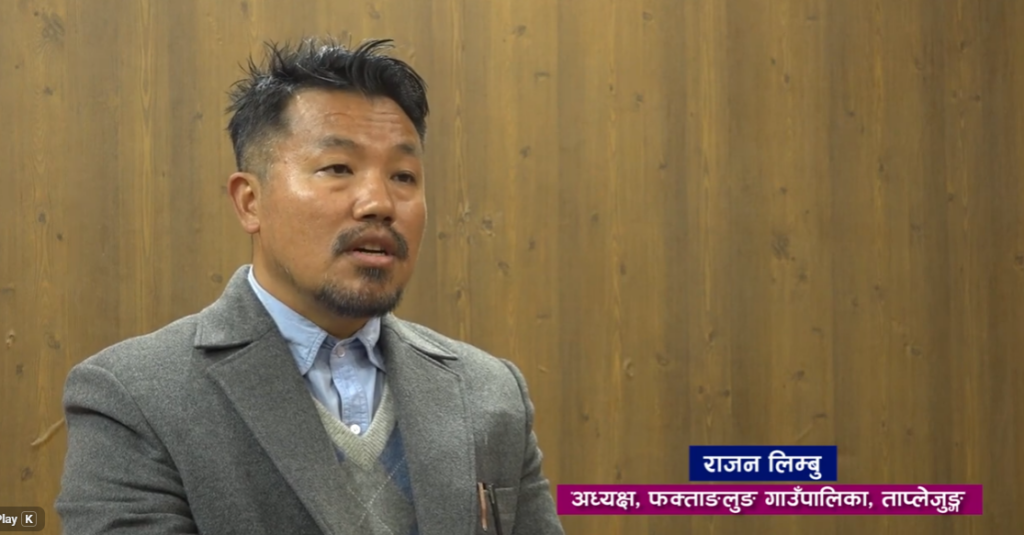
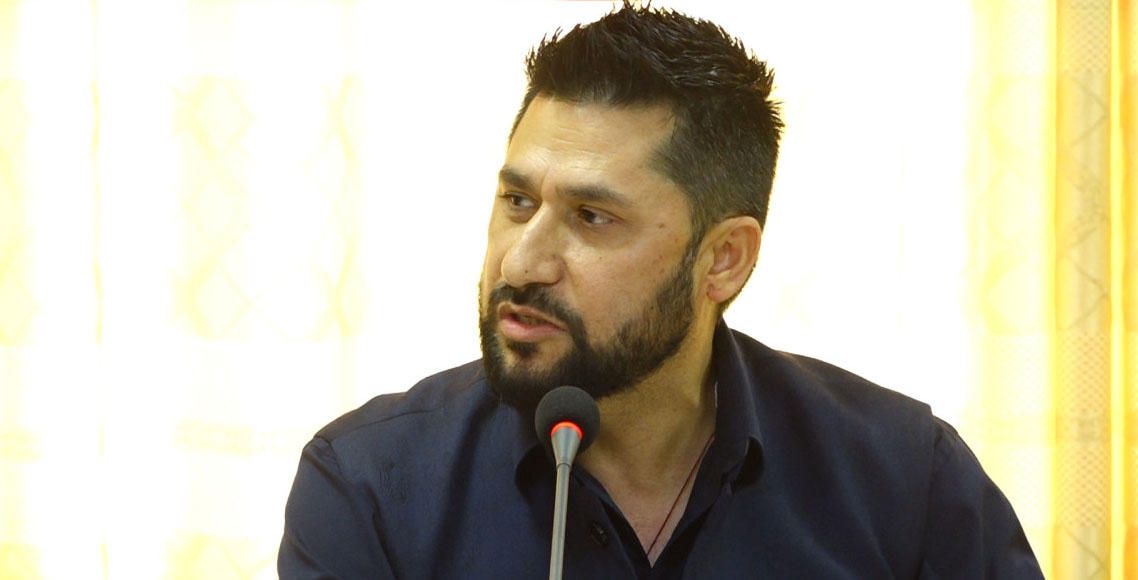
“We receive emergency calls almost every day. We have three drivers assigned to the three ambulances, and they respond whenever there is an emergency,” said Rural Municipality Chairman Rajan Limbu (Mukti). “We rescue around 300 patients each year and ambulance services to the district headquarters are provided free of charge. If a patient needs to be referred to a better-equipped hospital outside the district, the municipality charges only 50 per cent of the ambulance fare,” he said.
Although Phaktanglung covers nearly half of Taplejung district with an area of 1,858 square kilometres, its population of only around 12,000 means it receives limited funding, as central government budgets are largely allocated based on population, said Rural Municipality Chairman Rajan Limbu (Mukti).
Talking to The Rising Nepal, Chairman Limbu said that the rural municipality has launched a series of initiatives to improve public education, strengthen healthcare services and promote economic development through agriculture and hydropower.
Speaking about the municipality’s development priorities, Limbu said improving the quality of community schools remains one of the local government’s key objectives. He said efforts are being made to ensure regular classes, maintain discipline and strengthen communication between schools and parents through counselling programmes.
For years, Phaktanglung struggled to collect even its modest annual internal revenue target of Rs. 1.3 million. After improving tax collection and financial management, the municipality now generates more than Rs. 5 million a year, with revenue reaching as high as Rs. 8 million.
There are 40 schools in the rural municipality and nine of them are secondary schools. Out of the seven secondary schools, only two receive direct financial sanction and teacher quotas from the central government. The remaining seven secondary schools are entirely funded by the municipality’s internal revenues, ensuring remote children do not have to drop out.
To accommodate children traveling from far-flung, high-altitude settlements, the local government has established fully managed student dormitories, he said.
He said the municipality has adopted a stricter teacher recruitment process to appoint qualified teachers and improve classroom teaching. Teachers are also being encouraged to upgrade their professional skills through training.
To modernise teaching methods, the municipality has partnered with organisations including HBF, Read Nepal, Face Nepal and Action for Nepal to introduce smart boards, internet connectivity and digital learning materials in selected schools. A pilot curriculum, including new learning materials, is also being tested before being expanded to other schools.
Limbu said the municipality plans to provide free tuition classes for students requiring additional academic support. It is also working to establish hostel facilities where students from remote settlements will receive accommodation, meals and educational support free of charge.
“Our objective is to ensure that children do not miss out on education because of poverty or geographical remoteness,” he said.
In the health sector, Limbu said the municipality has expanded emergency and primary healthcare services. Two ambulances have been brought into operation to improve emergency transportation for patients living in remote villages.
He said residents are receiving free primary healthcare consultations, while the municipality has also organised free dental treatment and oral health camps. Access to medicines, pharmacy services and basic laboratory tests has also been expanded to improve healthcare coverage.
“Our priority is to ensure that no resident is deprived of basic healthcare because of distance or financial hardship,” he said.
Alongside education and health, the municipality is promoting income-generating activities. Limbu said agricultural development programmes are being implemented through training centres focusing on commercial farming, bio-farming and nursery production to create employment opportunities within the municipality.
credit: gorkhapatra










प्रतिक्रिया दिनुहोस्